Reflecting back on life now that I’m a boomer and now that my kids are starting their careers, I offer the following alternatives to the American Dream myths:
Myth 1: Home ownership
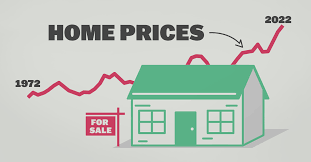
That dream became a nightmare with ever escalating house prices and rising interest rates. The dream crusher was caused when housing became a speculative commodity investment rather than simply a roof over your head. Being house-poor and working 2 and 3 jobs just to own a house and live in a town with “good” schools has given me a jaded view of the realtor-developer-financere cabal that supports this inflated market. Home ownership is a mirage. As long as you have a mortgage, you do not own the home because it’s the lender that really owns the home. When you finally pay off the mortgage, you own the home but both you and the home are much older and in need of repair. The upkeep costs for both you and the home are escalating. There is no sweet spot for home ownership
The alternative: Cooperative Housing where “you only pay for what you need” to live out your life in a clean, stable, affordable place not worrying about the real-estate investment rollercoaster. A long-term land lease would make the house affordable and add stability knowing that you can enjoy a life beyond the rat race of working just to maintain that address. Imagine how liberating that would be to spend time and resources on non-housing pursuits (i.e., starting a business, pursuing hobbies/interests, volunteering and giving back to the community, etc.)
Another alternative: Only buy a house if you can make it a dynamic investment rather than a static investment. Include an accessory apartment to generate additional income and possibly enable an in-law apartment. Convert as much of the lawn as you can to gardens that will reduce your food costs and if productive enough make a profit selling (or bartering for services) the excess produce. Consider a home based office or business. If you have a hobby or avocation that can be conducted from the house, be sure to maximize that space. Reconfigure the house to enable the renting of rooms if that’s what it takes to reduce the outrageous cost overhead of what is becoming the “privelage” of home ownership.
In sum, don’t buy a house or condo unless the circumstances are ripe and the deal is optimum.
Myth 2: College

Tears of joy upon graduating quickly turn to tears of sadness upon being saddled with crushing college debt. The higher the level of debt the lower the return on investment. You should not have to make a choice between studying what you enjoy vs. majoring in what will generate the most money. Nobody (no matter what their course of study) should be saddled with college debt for what might last the rest of their life.
The alternative: Less credentialling via diplomas and more credentialling by proving a mastery of the subject. More credit for life experiences, certifications and proving that you can handle the job. Isn’t that what the potential employers are looking for anyways so they can recruit employees who can “hit the ground running”? More internships, apprentiships, open-source learning and work-study scenarios where there is a greater liklihood of a successful fit between employee and employer. If enrollments decline thanks to alternative routes taken by students who refuse to accept “tuition ransom payments”, they will lower their costs or go out of business. If the college insists that they have such a wonderful job placement rate, let them put their money where their mouth is and put their own skin in the game. Let them revert to the original system (before the well intentioned infusion of government support that inflated college prices) whereby the college uses its own funds from their endownments to support promising (but poor) students. If enough prospective students follow the debt-free alternative to getting trained and landing jobs, maybe then the unholy alliance of “colleges, loan servicers, guidance counselors and the U.S. Dept. of Education” will get the message and die on the vine. Good riddings.
Myth 3: Cars

Everybody wants a car. It would be un-American to not want the freedom to go where you want, when you want. But at what cost? The car depreciates as soon as you drive it off the car lot. After you have paid off the car loan, the vehicle is showing age and repair costs are escalating. The cost of the car is more than just the purchase price. There is maintanence, insurance and taxes that need to be considered.
Possible alternatives:
If you live in an area with decent public trasit, use it. Use uber, turo and lift as needed when public transit is not an option. Consider ride-sharing and short term rentals (wheels when you need them) depending on your work/life schedule. Consider electric bikes and scooters if traffic patterns, infrastructure and climate is condusive.
Consider an RV/van conversion if your single and your work/lifestyle is such that you need to be mobile. This might be a realistic alternative if you do not have sufficient funds for a housing downpayment or you do not want to be settled down with a house.
In sum, hold off purchasing a vehicle as long as possible and once you make the purchase hang onto the vehicle as long as reasonably possible to maximize that investment.
Myth 4: Weddings, Vacations, Funerals and Special Events

I lump these together since they fall in the category of costly, semtimental and customary. Don’t be a slave to societaly pressures for conformity and tradition. Consider the obscene amount of money that’s being spent on a “one-off” situation.
It’s not that I’m against having fun, enjoying life and memoralizing lifes watershed moments (though my kids claim I’m averse to such endeavors). However, I suggest the following alternatives:
Scale the event so it does not break the budget. Be driven by the mantra of enjoying yourself and having a memorable experience rather than being tethered to an event that matches a societal expectation of what you should be doing. Examples might include an experiential experience with family/friends which build memories and share meaningful moments rather that the pomp and circumstance of what’s expected by society. Why be beholden to the cabal of wedding planners, funeral directors, vacation planners and cruise directors. If you have the opportunity to travel, enjoy yourself but keep aware of business, housing and lifestyle opportunities that might afford you a “Plan B” for future reference in case your work-housing-lifestyle circumstances change (which I guarantee they will change).
Myth 5: Consumerism

I have long been intrigued by the absurd statement that we need to increase spending to bolster the economy. If you are living paycheck to paycheck and are in debt, the last thing you should be doing is shopping.
The alternative:
Stop grocery shopping. Maybe a complete stop is impossible unless you have your own farm complete with cows, pigs, chickens, etc. However, if you can create a sufficient garden and master the process of canning/preserving goods to get you through the winter months, you could save a tremendous amount of money and have the satisfaction of being more self sufficient in increasingly troubled times. If you can create a geo-thermal greenhouse or vertical farm AND create alternative energy sources (solar panels, wood burning stove, etc.), you have options that others will not have. You will have affordable alternatives in the face of spiralling inflation and uncertain societal circumstances.
In sum, hope for the best but prepare for the worst. Reflecting of the nursery tale of The Three Little Pigs, be the pig in the brick house who sent his time wisely, though creatively and planned ahead.
© Gregory Dunn 2024
Get an email when I publish
 Dunn Writes Well